 +13692363966
 NEWSLETTER

Choosing the right Solar Panel Installer is one of the most important decisions you’ll make when switching your home to renewable energy.
Solar panels can generate electricity for decades, but the quality of the installation can have a major impact on system performance, safety, reliability, and long-term value.
A high-quality solar panel installer does more than place panels on a roof. The installer evaluates the property, designs an appropriate system, handles the installation process, coordinates permits and inspections, and helps homeowners understand how their system works.
For homeowners in Texas and California, Ever Volt provides residential solar solutions designed around individual energy requirements, property characteristics, and long-term goals.
This guide explains what homeowners should look for when selecting a solar installer and how to evaluate an installation company before signing a contract.
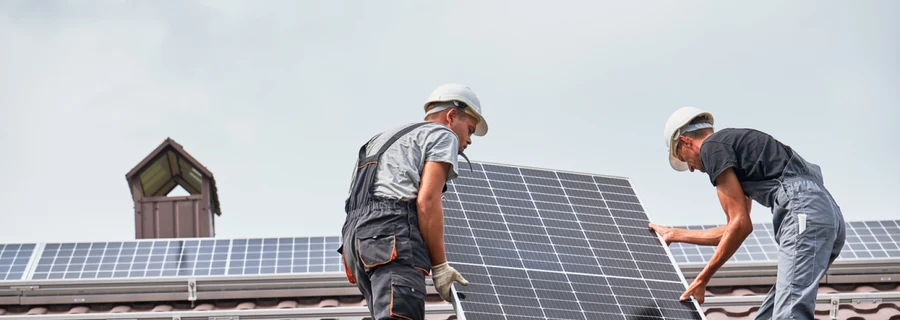
Table of Contents
- What Does a Solar Panel Installer Do?
- Why Professional Solar Installation Matters
- What Makes a Top-Rated Solar Installer?
- Solar Panel Installation Process
- Choosing Solar Panels
- Choosing the Right Inverter
- Battery Storage
- Solar Installation in Texas
- Solar Installation in California
- How to Compare Solar Installers
- Why Homeowners Consider Ever Volt
- Frequently Asked Questions
- Conclusion
What Does a Solar Panel Installer Do?
A Solar Panel Installer is responsible for installing and integrating the equipment that makes a residential solar energy system work.
A typical installation may involve:
- Solar panels
- Mounting hardware
- Inverters
- Electrical wiring
- Disconnects and safety equipment
- Monitoring equipment
- Battery storage, if included
The installer must ensure the system is properly integrated with the home’s electrical infrastructure and installed according to applicable requirements.
Why Professional Solar Installation Matters
Solar panels represent a significant investment.
Even high-quality equipment may not perform as expected if the installation is poorly designed or executed.
Professional installation can help address:
Safety
Solar systems involve electrical equipment and should be installed by appropriately qualified professionals.
Performance
Correct panel positioning and system design can help maximize electricity production.
Reliability
Proper mounting and electrical connections help support long-term system performance.
Warranty Protection
Some equipment manufacturers have specific installation requirements that must be followed for warranty coverage.
Compliance
Solar projects may involve building permits, electrical inspections, and utility requirements.
What Makes a Top-Rated Solar Panel Installer?
The term “top-rated” should mean more than having a large number of online reviews.
Homeowners should consider several factors.
Experience
How long has the company been installing solar?
Experience can help an installer understand the challenges associated with different roof types, electrical systems, permitting processes, and local requirements.
Proper Credentials
Before hiring a solar contractor, verify relevant:
- Licenses
- Insurance
- Certifications
- Manufacturer credentials
- Local authorizations
Requirements vary depending on location.
Quality Equipment
A professional installer should clearly identify the equipment being proposed.
Ask about:
- Solar panel manufacturer
- Panel model
- Inverter technology
- Battery manufacturer
- Monitoring system
- Mounting hardware
Customized Solar System Design
Every home is different.
A quality Solar Installation Company shouldn’t simply install the same system on every property.
The design should consider:
Household Energy Consumption
Your historical electricity usage provides an important starting point for determining system size.
Roof Size
The available roof area can determine how many solar panels can be installed.
Roof Orientation
The direction and pitch of the roof can affect solar production.
Shading
Trees, buildings, chimneys, and other structures can reduce sunlight reaching panels.
Future Energy Needs
Homeowners should consider whether they may add:
- Electric vehicles
- Battery storage
- Home additions
- New appliances
The Solar Panel Installation Process
A professional installation generally involves several stages.
Step 1: Initial Consultation
The process begins with a discussion about your energy goals.
Your installer should explain:
- How solar works
- Potential system options
- Financing
- Battery storage
- Installation requirements
Step 2: Property Assessment
The installer evaluates your property and electrical system.
This may include reviewing:
- Roof condition
- Roof structure
- Sun exposure
- Electrical panel
- Available installation space
Step 3: System Design
The installer develops a customized design based on the property’s characteristics and energy requirements.
Step 4: Permitting
Required permits and approvals are obtained before installation.
Step 5: Solar Installation
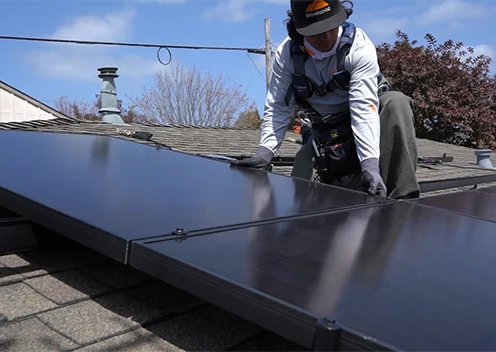
The installation team mounts the panels and connects the system’s electrical components.
Step 6: Inspection
The completed system may require inspection before it can be activated.
Step 7: Utility Interconnection
Where applicable, the system is connected to the electrical grid according to the local utility’s procedures.
Step 8: System Activation
Once required approvals are completed, the system can begin producing electricity.
Choosing the Right Solar Panels
Not all solar panels have identical specifications.
When comparing equipment, consider:
- Efficiency
- Power output
- Product warranty
- Performance warranty
- Temperature performance
- Manufacturer reputation
A professional Residential Solar Installer should explain why a particular panel is appropriate for your property.
Choosing the Right Inverter
Solar panels produce DC electricity, while most household appliances use AC electricity.
The inverter converts the electricity into a form that can be used by the home.
Common residential inverter configurations include:
- String inverters
- Microinverters
- Power optimizers combined with inverters
Each configuration has advantages and limitations.
The right choice depends on factors such as roof layout, shading, system design, and budget.
Battery Storage for Residential Solar
Home batteries can store electricity generated by solar panels for later use.
Battery storage can provide:
- Evening energy
- Greater energy independence
- Backup power capabilities
- Additional flexibility in energy management
Not every homeowner needs a battery, so the decision should be based on your energy goals, utility arrangement, budget, and desired backup capability.
Solar Installation in Texas
Texas homeowners interested in solar should consider factors such as:
- Electricity consumption
- Utility provider
- Solar production
- Roof characteristics
- System size
- Battery storage
- Financing
A local Solar Installer Texas should understand the permitting and utility considerations applicable to the specific property.
Solar Installation in California
California homeowners should pay close attention to current state and utility requirements.
The California Public Utilities Commission provides consumer guidance on solar provider selection, contracts, financing, and solar-plus-storage. Homeowners should review current rules before making an investment.
A qualified Solar Installer California should also be familiar with applicable local permitting and interconnection requirements.
Why Consider Ever Volt?
Ever Volt can position itself as a customer-focused Solar Panel Installation Company by emphasizing:
- Customized system design
- Quality equipment
- Professional installation
- Transparent communication
- Financing guidance
- Battery-storage options
- Long-term support
The objective is to help homeowners understand their options before making a major energy investment.
Top-Rated Solar Panel Installer in Texas & California: Costs, Reviews, Warranties, and How to Choose the Right Installer
Choosing a Top-Rated Solar Panel Installer requires careful research. A solar system is a long-term investment, so homeowners should look beyond advertisements and compare the complete installation package.
The right installer should provide appropriate equipment, professional workmanship, clear pricing, realistic production estimates, warranty information, and dependable customer support.
For homeowners considering Ever Volt, understanding these factors can make the solar-buying process easier and help you compare providers objectively.
How Much Does Solar Panel Installation Cost?
The cost of a residential solar installation varies significantly from one home to another.
Factors that can influence the total price include:
- Solar system size
- Type and efficiency of panels
- Inverter technology
- Battery storage
- Roof complexity
- Electrical upgrades
- Permitting requirements
- Installation labor
- Financing
- Location
A larger home with higher electricity consumption may require a larger system, while a smaller home may require fewer panels.
Because of these differences, homeowners should be cautious of companies advertising one universal price for every property.
A professional Solar Panel Installer should evaluate your home before providing a final proposal.
Don’t Compare Solar Companies by Price Alone
Price is important, but it should not be the only factor.
Two companies may offer different prices because they are proposing different:
- System sizes
- Solar panels
- Inverters
- Batteries
- Warranties
- Installation services
- Financing arrangements
For example, a $20,000 proposal and a $24,000 proposal cannot be compared fairly if the systems have different capacities or equipment.
Always compare the complete scope of work.
How to Evaluate Solar Installer Reviews
Online reviews can help you understand a company’s customer experience, but they should be evaluated carefully.
Look for patterns in reviews rather than focusing on one unusually positive or negative comment.
Pay attention to feedback about:
Communication
Did customers receive timely responses?
Installation Quality
Were customers satisfied with the workmanship?
Project Management
Did the company keep customers informed about permits, inspections, and scheduling?
Post-Installation Support
Did the company respond when customers needed assistance?
Warranty Experience
Were warranty claims handled appropriately?
A large number of reviews isn’t automatically proof that a company is the best installer.
Look for Genuine Customer Experiences
A strong solar company should be able to demonstrate real work.
Useful evidence can include:
- Verified customer reviews
- Real installation photographs
- Case studies
- Project descriptions
- Customer testimonials
- Local references, where appropriate
Ever Volt can strengthen its online reputation by publishing genuine customer experiences and documenting completed projects with permission.
Understanding Solar Warranties
Warranty coverage is one of the most important factors to consider when choosing a Residential Solar Installer.
There are several different types of warranties.
Solar Panel Product Warranty
This generally protects against certain manufacturing defects.
The exact coverage depends on the manufacturer and product.
Solar Panel Performance Warranty
Solar panels gradually lose some production capacity over time.
A performance warranty establishes the manufacturer’s expected production level over a specified period.
Inverter Warranty
The inverter is a critical part of the solar system and normally has its own warranty.
Ask:
- How long does coverage last?
- What does the warranty cover?
- Who handles the claim?
- Is labor included?
- What happens if replacement is necessary?
Battery Warranty
If your system includes battery storage, review its warranty separately.
Important details may include:
- Warranty duration
- Guaranteed capacity
- Cycles or throughput
- Operating conditions
- Replacement provisions
Workmanship Warranty
A workmanship warranty covers certain problems associated with the installation itself.
This is separate from the manufacturer’s equipment warranty.
Before signing a contract, ask the installer to explain exactly what the workmanship warranty covers.
Financing Your Solar Installation
Homeowners can use several methods to pay for a solar system.
Common options include:
- Cash
- Solar loans
- Home improvement loans
- Leases
- Power Purchase Agreements
Availability varies by location and provider.
If you choose financing, don’t focus only on the monthly payment.
Review:
- Total project price
- Interest rate
- Loan term
- Total repayment
- Down payment
- Ownership
- Early-payment terms
- Escalator clauses, where applicable
A lower monthly payment can sometimes result from a longer repayment period.
Solar Loans vs. Third-Party Ownership
With a solar loan, the homeowner generally purchases the system and repays the financing over time.
With third-party ownership arrangements such as leases or PPAs, another party may own the system while the homeowner pays according to the agreement.
Each option has different financial and contractual implications.
Homeowners should carefully review the agreement before choosing.
Questions to Ask a Solar Contractor
Before hiring a Solar Contractor, ask the following questions.
1. Are you licensed and insured?
Ask for documentation where appropriate.
2. How much experience do you have?
Find out how long the company has been installing residential solar.
3. Who performs the installation?
Determine whether the work is completed by company employees or subcontractors.
4. What equipment are you recommending?
Request the exact brands and model numbers.
5. What is the estimated annual energy production?
Ask how the estimate was calculated.
6. What warranties are included?
Get warranty details in writing.
7. Who handles permits?
Clarify who is responsible for the permitting process.
8. Who coordinates the utility connection?
The company should explain its responsibilities clearly.
9. What happens if my roof needs repairs?
Understand whether roof repairs are included or handled separately.
10. What support do you provide after installation?
Ask about monitoring, troubleshooting, maintenance, and warranty assistance.
Common Solar Installation Mistakes
Homeowners can avoid many problems by researching their installer carefully.
Mistake #1: Choosing Based Only on Price
The lowest quote may not provide the best long-term value.
Mistake #2: Ignoring the Roof
Solar panels can remain on a roof for decades.
If the roof is near the end of its useful life, repairing or replacing it before solar installation may be more practical.
Mistake #3: Not Checking Equipment
Don’t accept a proposal that simply says “premium panels.”
Ask for the exact manufacturer and model.
Mistake #4: Ignoring the Inverter
The inverter is an essential component of the solar system.
Make sure you understand its specifications and warranty.
Mistake #5: Not Planning for Future Energy Use
Consider whether you’ll eventually purchase:
- An EV
- A battery
- New appliances
- A heat pump
- Additional electrical equipment
Your future energy consumption may be significantly different from today’s.
Battery Storage: Is It Worth It?
Battery storage isn’t necessary for every homeowner.
However, it can be valuable for people who want greater control over their electricity.
Potential benefits include:
- Storing excess solar energy
- Using stored energy at night
- Backup capabilities
- Greater energy independence
The financial value of a battery depends heavily on local electricity rates, utility policies, battery costs, and how the system is operated.
Solar Installation for Texas Homes
Texas has substantial solar potential, but the economics of a system can vary between homeowners.
When evaluating solar in Texas, consider:
- Your electricity provider
- Electricity rate structure
- Household energy consumption
- Roof orientation
- Solar production
- Battery storage
- Financing
A qualified Solar Installer Texas should evaluate your specific property instead of relying on generic assumptions.
Solar Installation for California Homes
California homeowners should pay close attention to current state and utility policies.
Solar economics can depend on how electricity generated by your system is valued under your applicable utility arrangement.
Battery storage may also be an important consideration for some California homeowners.
The California Public Utilities Commission provides consumer resources covering solar contracts, financing, provider selection, and solar-plus-storage. Homeowners should consult current official guidance when evaluating a project.
What Makes Ever Volt Different?
Ever Volt can differentiate itself by focusing on the complete customer experience.
A strong Solar Panel Installation Company should provide:
Education
Help homeowners understand solar before purchasing.
Customization
Design systems according to actual energy requirements.
Transparency
Clearly explain costs, equipment, financing, and warranties.
Professionalism
Maintain clear communication throughout the installation process.
Long-Term Support
Remain available after the system has been installed.
Building a Long-Term Relationship With Homeowners
The solar installation should be viewed as the beginning of a relationship rather than the end of a sale.
Homeowners may eventually need:
- Monitoring assistance
- Equipment troubleshooting
- Warranty support
- Battery installation
- System expansion
- EV charging
- Additional energy solutions
Ever Volt can build stronger customer loyalty by continuing to support homeowners as their energy requirements evolve.
Frequently Asked Questions
How do I choose a solar panel installer?
Compare multiple qualified installers based on credentials, experience, equipment, warranties, pricing, installation process, customer reviews, and post-installation support.
What should I look for in a solar installation company?
Look for a company that provides transparent proposals, quality equipment, professional installation, appropriate licensing, warranty coverage, and reliable customer service.
Is a local solar installer better?
A local installer may have valuable knowledge of regional permitting, utility requirements, weather conditions, and building practices. However, homeowners should still verify credentials, experience, and reputation.
How long does solar installation take?
The physical installation may take only a few days for some residential projects, but the complete process can take longer because of design, permitting, inspection, and utility approval.
Do I need a battery with solar panels?
No. A battery is optional for many grid-connected systems. However, storage can provide additional energy flexibility and backup capabilities.
How long do solar panels last?
Modern solar panels are generally designed for long-term operation, with many manufacturers providing performance warranties extending for decades. Exact lifespan and warranty terms vary by product.
Should I repair my roof before installing solar?
If your roof requires major repairs or is nearing the end of its expected life, it may be sensible to address those issues before installing solar panels.
Discuss the condition of your roof with a qualified professional before proceeding.
Final Takeaway
Selecting a Top-Rated Solar Panel Installer requires research.
Don’t choose a provider simply because it has the lowest advertised price or the largest number of online reviews.
Instead, evaluate the entire package:
Equipment + Design + Installation + Warranty + Financing + Customer Service + Long-Term Support.
For homeowners in Texas and California, Ever Volt can build trust by providing customized solutions, transparent information, professional installation, and ongoing support.
A solar system is designed to serve your home for many years. Taking the time to choose the right installer today can help create a better experience throughout the life of the system.