 +13692363966
 NEWSLETTER

Introduction
Solar energy has become an increasingly important option for homeowners who want to reduce their dependence on conventional electricity, control energy costs, and have access to a cleaner source of power.
But installing solar panels alone does not automatically guarantee a reliable home energy system.
A successful residential solar setup requires several components to work together, including solar panels, an inverter, batteries when needed, electrical protection, mounting equipment, monitoring, and properly designed wiring.
The most important question is therefore not simply:
“How many solar panels should I buy?”
Instead, homeowners should ask:
“How can I design a solar energy system that matches my home’s electricity needs?”
This guide provides a comprehensive explanation of solar energy for home use in 2026, including system design, electricity consumption, solar panels, batteries, inverters, backup power, installation, maintenance, costs, efficiency, and common mistakes.

What Is Solar Energy for Home Use?
Residential solar energy is electricity generated from sunlight and used to supply a home’s electrical needs.
Solar panels contain photovoltaic cells that convert sunlight into electricity.
The electricity generated can then be:
- Used immediately by appliances
- Stored in batteries
- Exported to the grid where permitted
- Combined with other power sources
A basic residential solar system can be represented as:
Sunlight → Solar Panels → Inverter → Home
A solar-plus-battery system adds:
Sunlight → Solar Panels → Inverter → Battery + Home
This gives homeowners greater control over when and how solar electricity is used.
Why Are Homeowners Choosing Solar Energy?
There are several reasons people consider residential solar.
1. Lower Dependence on the Grid
A solar system can generate electricity on-site, reducing reliance on electricity supplied by the grid.
2. Energy Cost Management
Solar electricity can reduce the amount of conventional electricity a household needs to purchase.
The actual financial savings depend on system cost, electricity prices, solar production, and household consumption.
3. Backup Power
A battery-equipped system can provide backup electricity during grid outages when properly designed.
4. Renewable Energy
Solar energy uses sunlight rather than burning fossil fuels at the point of generation.
5. Greater Energy Independence
A well-designed solar-plus-storage system can allow homeowners to generate and store a significant portion of their own electricity.

How Does a Home Solar System Work?
A typical system follows several steps.
Step 1: Sunlight Reaches the Panels
Solar panels absorb sunlight.
Step 2: Panels Generate DC Electricity
The photovoltaic cells produce direct current.
Step 3: The Inverter Converts the Electricity
The inverter converts DC electricity into AC electricity.
Step 4: The Home Uses the Electricity
Appliances consume the electricity.
Step 5: Excess Energy Is Managed
Depending on the system, excess electricity can charge a battery or potentially be exported to the grid.
Main Components of a Residential Solar System
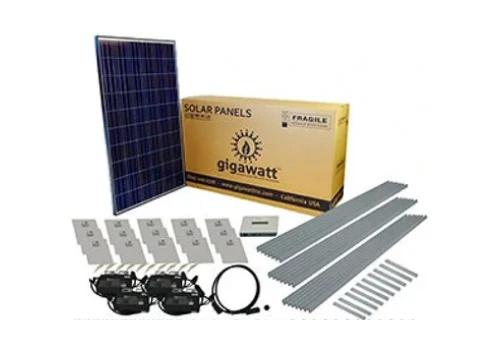
A complete system may contain:
Solar Panels
Generate electricity from sunlight.
Solar Inverter
Converts DC electricity into AC electricity.
Solar Battery
Stores electricity for later use.
Mounting Structure
Secures panels to a roof or other surface.
Electrical Protection
Protects the system from specified electrical faults and abnormal conditions.
Monitoring System
Tracks solar generation, consumption, battery status, and system performance.
How Much Solar Energy Does a Home Need?
There is no single answer.
The correct system size depends on the home’s electricity consumption.
For example, a household using only a few kilowatt-hours per day will have very different requirements from a large home operating several air conditioners, pumps, freezers, and other high-power appliances.
The first step is therefore to determine:
How many kilowatt-hours does the home consume?
Understanding Kilowatt-Hours
Electricity consumption is measured in kilowatt-hours, or kWh.
For example, a 1kW appliance operating for 3 hours would theoretically consume:
Similarly, a 500W appliance operating for 4 hours would consume:
0.5kW × 4 hours = 2kWh
Understanding kWh makes it easier to estimate your household’s energy requirements.
Create a Home Energy Audit
Before buying solar equipment, make a list of your appliances.
For example:
| Appliance | Approximate Power | Hours/Day |
|---|---|---|
| Refrigerator | Varies | 24 |
| Television | Varies | 4 |
| Fans | Varies | 8 |
| Lighting | Varies | 5 |
| Laptop | Varies | 6 |
| Water pump | Varies | 2 |
| Air conditioner | Varies | 6 |
The exact energy consumption should ideally be determined from appliance labels, measurements, or reliable usage data.
High-Energy Appliances
Some appliances can dramatically increase the size of a solar system.
These include:
- Air conditioners
- Electric water heaters
- Electric ovens
- Large water pumps
- Electric vehicles
- Electric cooking equipment
- Large refrigeration systems
If your home uses several high-energy appliances, your solar system needs to account for both their energy consumption and their power requirements.
Solar Energy for Air Conditioning
Air conditioning is one of the most important loads to consider.
A home with multiple air conditioners may need:
- More solar panels
- A larger inverter
- More battery storage
- Greater backup capacity
Air conditioners can also have startup or compressor-related power requirements.
Therefore, the inverter must be able to handle the expected load.
Solar Energy for Refrigerators and Freezers
Refrigerators and freezers operate for long periods and are important backup loads.
During an outage, many homeowners prioritize refrigeration because food can spoil if the appliances remain off for too long.
A solar-plus-battery system should therefore account for their daily energy use and startup requirements.
Solar Energy for Water Pumps
Water pumps can also be significant electrical loads.
The required solar capacity depends on:
- Pump power
- Operating hours
- Frequency of operation
- Water requirements
If a pump is connected to a battery-backed system, inverter surge capability should also be evaluated.
Solar Panel Sizing
Once you know your energy consumption, you can estimate the solar array size.
A simplified formula is:
Required Solar Capacity = Daily Energy Consumption ÷ Peak Sun Hours
However, this is only a starting point.
Real systems experience losses and variable weather conditions.
A final design should account for:
- Inverter efficiency
- Temperature
- Wiring
- Shading
- Panel orientation
- Battery losses
- Seasonal solar production
Example of Solar Sizing
Suppose your home consumes:
20kWh/day
and the location receives approximately:
5 peak sun hours/day.
The simplified calculation is:
20 ÷ 5 = 4kW
This suggests a starting solar capacity of approximately 4kW.
However, additional capacity may be needed after system losses and other conditions are considered.
Choosing Solar Panel Wattage
Residential solar panels are available in different power ratings.
For example:
- 400W
- 450W
- 500W
- 550W
Higher-rated panels can reduce the number of panels required to reach a particular system capacity.
However, panel dimensions, roof layout, inverter compatibility, and availability should also be considered.
How Many Panels Do You Need?
Suppose you want approximately 5kW of solar capacity.
Using 500W panels:
5,000 ÷ 500 = 10 panels
Using 400W panels:
5,000 ÷ 400 = 12.5
So you would need approximately 13 panels to exceed 5kW.
The actual system design may differ depending on equipment specifications and site conditions.
Roof Space and Solar Panels
Solar panels need physical space.
Before selecting the number of panels, determine:
- Roof dimensions
- Usable roof area
- Roof orientation
- Roof pitch
- Shading
- Obstacles
If roof space is limited, higher-efficiency panels may allow more solar capacity to be installed in the available area.
Solar Panel Orientation
Panel orientation affects how much sunlight reaches the panels.
The ideal orientation depends on the property’s location.
Different roof sections can also produce electricity at different times of day.
A professional solar assessment should determine the most suitable layout.
Solar Panel Shading
Shading can significantly reduce solar production.
Potential sources include:
- Trees
- Buildings
- Walls
- Other roof structures
A property should be assessed for shading before installation.
If shading cannot be avoided, system design options such as different string arrangements or panel-level electronics may be considered.
Solar Inverter for Home
The inverter is the central electrical conversion device.
When choosing one, consider:
- Rated output
- DC input limits
- MPPT range
- Number of MPPT inputs
- Efficiency
- Battery compatibility
- Backup capability
- Monitoring
- Warranty
A good inverter should be appropriately matched to the solar array and household electrical requirements.
Hybrid Solar Systems
A hybrid solar system combines:
Solar panels + inverter + battery + grid
The inverter manages energy between these components.
During the day, solar energy can power the home and charge the battery.
At night, the battery can supply the home.
If the battery becomes depleted, the system can use another available power source.
Off-Grid Solar Systems
An off-grid system operates without depending on a conventional electrical grid connection.
It typically requires:
- Solar panels
- Battery storage
- Inverter
- Appropriate protection
- Careful energy management
Off-grid systems require more detailed planning because there is no grid available to fill the energy gap during prolonged periods of low solar production.
Battery Sizing for Home Solar
Battery capacity is measured in kWh.
To determine an appropriate battery size, consider:
- Daily consumption
- Nighttime consumption
- Backup requirements
- Essential loads
- Desired autonomy
- Solar production
A battery should not be selected solely by looking at its capacity.
Its power output must also be sufficient.
Battery Capacity vs Power
These two specifications are different.
Capacity
Measured in kWh.
It tells you how much energy the battery stores.
Power
Measured in kW.
It tells you how much electricity the battery can provide at a given time.
A battery could have a large capacity but insufficient power output for certain high-demand appliances.
Solar Battery Backup Example
Suppose your battery has:
10kWh usable capacity
and your essential loads consume:
1kW on average.
A simplified estimate would be:
10kWh ÷ 1kW = 10 hours
If your average load is only 500W:
10kWh ÷ 0.5kW = 20 hours
Actual runtime will vary because of inverter losses, battery limits, changing loads, and operating conditions.
Lithium Battery Storage
Lithium-based batteries are widely used in modern home energy storage.
They offer several useful characteristics, including:
- High energy density
- Good efficiency
- Long cycle life
- Low routine maintenance
Lithium iron phosphate batteries, commonly called LiFePO4 or LFP, are particularly common in stationary energy storage.
Solar Battery Safety
Battery systems should be professionally installed according to manufacturer requirements.
Important considerations include:
- Temperature
- Ventilation
- Electrical protection
- Mounting
- Cable sizing
- Battery management
- Inverter compatibility
Do not modify battery protection systems or attempt internal repairs without appropriate qualifications.
Solar Energy During a Power Outage
A common misconception is that every solar system automatically powers the home during a blackout.
That is not true.
Most standard grid-tied solar systems shut down during grid outages for safety reasons.
To maintain power during an outage, the system needs appropriate backup equipment.
This usually includes:
- Battery storage
- Backup-capable inverter
- Appropriate electrical isolation
- Supported backup circuits
Essential Backup Loads
A battery does not necessarily need to power everything.
You can prioritize critical appliances such as:
- Refrigerator
- Lights
- Fans
- Internet equipment
- Security equipment
- Selected outlets
This can dramatically extend battery runtime.
Whole-Home Solar Backup
Whole-home backup requires more capacity.
The system needs to account for:
- Maximum household demand
- Large appliances
- Startup surges
- Battery capacity
- Inverter capacity
Whole-home backup can therefore be significantly more expensive than essential-load backup.
Solar Energy and the Grid
A grid-connected solar system can interact with the electrical grid.
Depending on local regulations and utility arrangements, excess electricity may potentially be exported.
The exact rules vary by location.
Homeowners should verify local requirements before assuming that exported solar electricity will automatically generate financial compensation.
Solar Energy and Electricity Bills
Solar can reduce electricity purchased from the grid.
The amount of savings depends on:
- Solar production
- Household consumption
- Electricity prices
- System size
- Battery usage
- Export arrangements
A home that uses much of its solar electricity directly may benefit differently from one that exports most of its production.
Solar Self-Consumption
Solar self-consumption means using solar electricity directly in your home rather than exporting it.
You can increase self-consumption by operating certain appliances during periods of high solar generation.
For example, where practical, you might schedule:
- Water pumping
- Washing machines
- Dishwashers
- Other flexible loads
during sunny periods.
Solar Monitoring
Monitoring allows homeowners to see how their system is performing.
Depending on the equipment, monitoring can show:
- Solar generation
- Home consumption
- Battery charging
- Battery discharge
- Grid imports
- Grid exports
- Faults
This information can help identify unusual performance.
Solar System Maintenance
Solar systems are generally low-maintenance.
However, homeowners should periodically check:
- Panel condition
- Inverter status
- Battery status
- Cables
- Mounting equipment
- Monitoring data
Professional inspections may be appropriate depending on the system and local requirements.
Solar Panel Cleaning
Dust and dirt can accumulate on solar panels.
The impact depends on local environmental conditions.
In areas with heavy dust, agricultural activity, or long dry seasons, cleaning may be more important.
Cleaning should be done safely and according to manufacturer recommendations.
Solar System Lifespan
Different components have different expected service lives.
Solar panels are designed for long-term operation.
Inverters generally have a different service-life profile.
Batteries also degrade through use and age.
When planning a solar system, consider the long-term replacement and maintenance requirements of each component.
How Much Does a Home Solar System Cost?
The cost varies significantly depending on:
- System capacity
- Panel quality
- Inverter type
- Battery capacity
- Installation complexity
- Roof design
- Electrical upgrades
- Monitoring
- Local labor costs
A battery system will generally cost more than a solar-only system.
The most useful comparison is therefore the total installed system cost, rather than the price of individual panels.
How to Choose a Solar Installer
Before hiring an installer, ask for:
- Company experience
- Equipment specifications
- System design
- Warranty information
- Installation scope
- Maintenance arrangements
- References where appropriate
Do not choose solely on price.
A solar system is a long-term investment, so installation quality matters.
Questions to Ask Your Solar Installer
Before signing a contract, ask:
- How many panels will be installed?
- What is the total system capacity?
- What inverter will be used?
- Can the system support batteries?
- Will the system provide backup power?
- Which appliances will be backed up?
- What warranties are included?
- How will the system be monitored?
- Can the system be expanded?
- What maintenance is required?
These questions can prevent misunderstandings.
Common Solar Energy Mistakes
Buying Too Few Panels
An undersized system may not meet your electricity requirements.
Buying Too Many Panels
Oversizing without proper system planning can create unnecessary costs.
Ignoring the Inverter
The inverter is just as important as the panels.
Installing an Incompatible Battery
Battery and inverter compatibility must be verified.
Ignoring Roof Condition
A damaged roof should be addressed before installation.
Ignoring Future Electricity Needs
Plan for changes in household consumption.
Expecting Unlimited Backup
Battery capacity is finite.
Frequently Asked Questions
Is solar energy good for a home?
Solar energy can be an effective way to generate electricity at home, particularly when the system is properly designed for local conditions and household consumption.
Can solar panels power an entire house?
Yes, a sufficiently sized system can potentially supply a home’s electricity needs. The required size depends on consumption and local solar conditions.
Do I need batteries for home solar?
No. A grid-connected solar system can operate without batteries. Batteries become important when you want energy storage or backup power.
How many solar panels do I need?
The answer depends on your electricity consumption, panel wattage, sunlight, roof conditions, and desired solar coverage.
Can solar work during a blackout?
Solar alone does not necessarily provide blackout power. Backup-capable equipment is required.
Is solar energy expensive?
The initial investment can be significant, especially when batteries are included, but the long-term economics depend on electricity prices, system cost, solar production, and usage.
How long can a solar battery power my home?
It depends on battery capacity and household electricity consumption.
Can I expand my solar system later?
Potentially, but the inverter, wiring, roof space, electrical equipment, and system design must support expansion.
Final Conclusion
Designing a reliable solar energy system for your home requires much more than calculating the number of solar panels.
You need to consider the entire energy system:
Solar panels + inverter + battery + electrical protection + household consumption + installation + monitoring
A properly designed system can help homeowners generate clean electricity, reduce dependence on the grid, store energy for later use, and maintain essential power during outages.
The most important step is to begin with your actual electricity consumption.
From there, determine the appropriate solar capacity, inverter, battery size, roof layout, and backup requirements.
Do not simply purchase the cheapest panels or the largest battery.
Instead, build a system that is properly sized, compatible, safely installed, expandable where practical, and designed around your home’s current and future electricity needs.
That approach can make residential solar a much more reliable and valuable long-term energy investment.